
Minecraft Dungeons 2 Equipment & Talismans Guide
Understand Minecraft Dungeons 2 equipment: twelve combat slots, separate armor pieces, passive talismans and how to compare item effects.
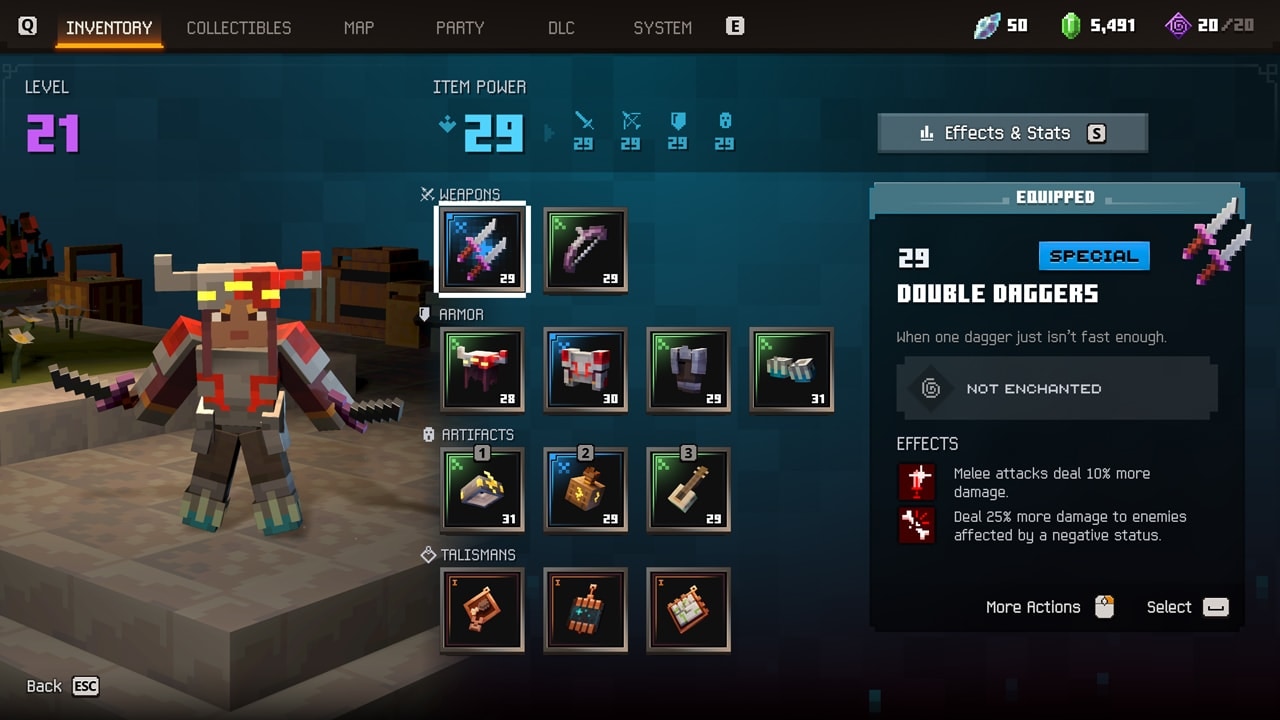

Minecraft Dungeons 2 equipment gives you more decisions than the first game’s loadout. Armor is split into separate pieces and talismans add passive bonuses. This guide helps you compare a new item without relying on an unverified best-build list. The principles apply across PC and consoles. For the broader changes, see Minecraft Dungeons vs Minecraft Dungeons 2.
What changed in Minecraft Dungeons 2 equipment?
The game expands from six to twelve combat slots. Four named armor pieces are a helmet, chestplate, leggings and boots. A new chestplate therefore changes one part of your armor setup; it is not a replacement for every armor piece.
Items of the same type may have different random effects. Compare the actual item descriptions rather than assuming that two matching names mean identical results.
How should you compare a new piece?
- Identify the slot it replaces. Keep comparisons within that slot.
- Read the item’s direct stats and its additional effects separately.
- Check the conditions on each effect: the attack, resource, movement or situation that activates it.
- Ask whether that condition happens regularly in your current playstyle.
- Look at your other gear for complementary effects before investing in an enchantment.
- Change one part at a time when evaluating a new setup, so you can tell what changed.
The last step is a practical comparison method, not a measured claim that one particular loadout is stronger.
What do talismans contribute?
Talismans supply passive bonuses. Think of them as a way to support a decision you have already made: which weapon you use, how you move and what your build is trying to improve. Read the full condition instead of comparing only the largest percentage.
A conditional bonus and an always-applicable bonus cannot be compared by headline number alone. A benefit you rarely activate may be less useful to you even when its listed value is larger.
When should you enchant?
Once you have chosen a suitable item, use the enchanting guide to apply an effect from your library. The equipment decision comes first; spending resources is the follow-up. Do not assume that upgrades can always be refunded.
For an overview of attack styles, see the weapon reference. For bows and crossbows, also account for ammunition recovery. This page does not claim a universal damage ranking, drop location or finished endgame build.
Keep exploring
guides
Minecraft Dungeons vs Minecraft Dungeons 2: What Changed
Compare the first Minecraft Dungeons with Minecraft Dungeons 2: world structure, gear slots, enchanting, talismans and ranged ammo.
guides
Minecraft Dungeons 2 Beginner Guide
Start Minecraft Dungeons 2 with a clear plan: learn movement, follow quests, compare equipment, unlock enchanting and choose how to play.
guides
Minecraft Dungeons 2: How to Enchant Gear
Learn how to enchant gear in Minecraft Dungeons 2: unlock the Enchantsmith, use your book library, check resource costs and upgrade effects.