
Minecraft Dungeons 2 Enemy Guide: Threats and Fight Priorities
Identify common Minecraft Dungeons 2 enemy threats and choose a response to explosions, ranged attacks, buffs and crowded fights.
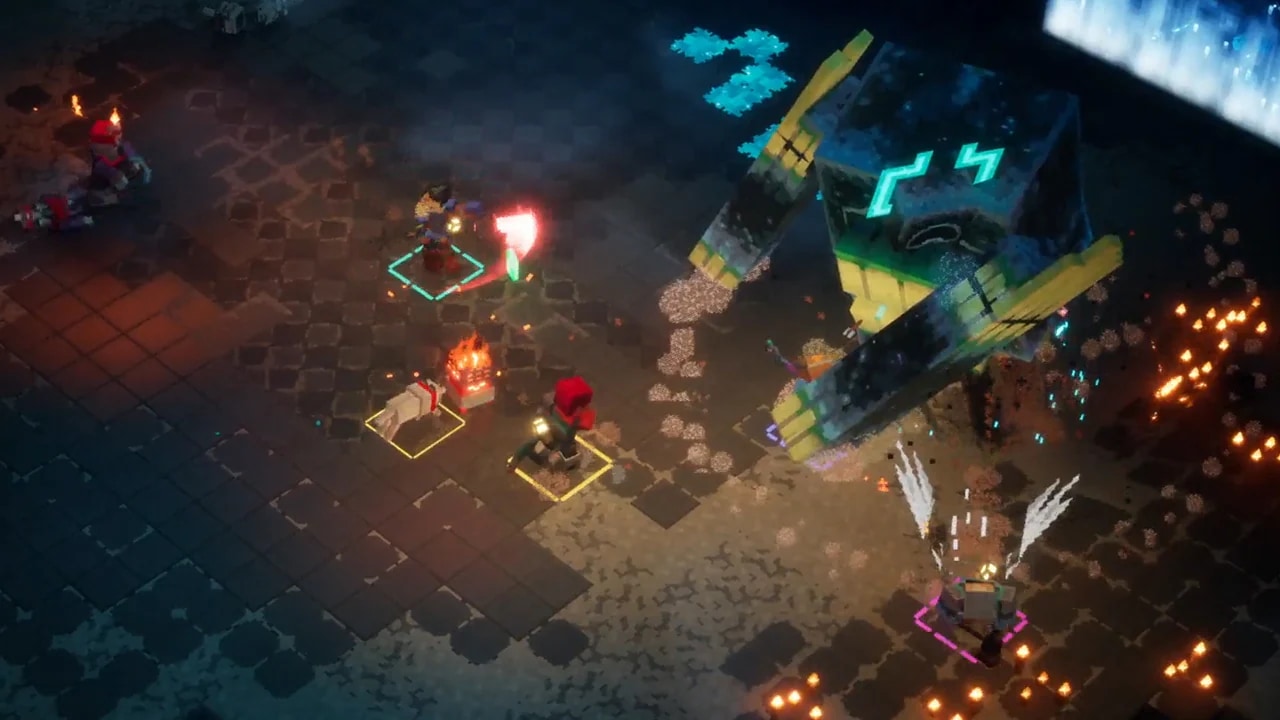
Launch-period enemy guides describe a mix of familiar Minecraft creatures and new threats in the Overworld and the Sift. This guide organizes selected enemy names listed by both an editorial guide and a community Wiki by the problem they create in a fight. It is a decision aid, not a complete bestiary or a tested route for every difficulty.
Which enemy needs attention first?
Look for the attack that will change your position or make the rest of the group harder to handle. If an explosion is about to land, move before attacking. Once you have room, deal with a support enemy or a ranged attacker that is controlling the fight. Return to close-range enemies after you have an escape path.
| Threat | What to watch for | First response |
|---|---|---|
| Creeper | A close-range explosion after it approaches | Leave the blast area; use a ranged opening if one is safe |
| Enchanter | Buffs applied to nearby enemies | Consider breaking the support link by targeting the Enchanter |
| Geomancer | Stone pillars that restrict space or threaten an explosion | Keep an open lane before committing to a long attack |
| Cave Spider | Fast approach and poison pressure | Avoid being surrounded; reposition before trading hits |
| Pillager | Ranged pressure while other enemies close in | Use cover or movement to reduce incoming fire |
| Nester | Close-range pressure, especially in a group | Make space before focusing on a single target |
These are reported behaviors from an early enemy roundup, not measured damage, fixed spawn rules or guaranteed timing. Watch the current encounter’s telegraphs. Ranged combat can help you create room, but its ammunition still needs time to recover.
How should you handle a crowded encounter?
- Identify the nearest immediate hazard: an imminent blast, blocked path or incoming projectile.
- Move into space where you can still dodge or jump. Do not chase one target through an active hazard.
- Look for a support enemy such as an Enchanter and decide whether removing it makes the rest of the pack easier.
- Attack during a safe opening, then check your position and remaining ammunition again.
- In co-op, agree on the priority target so the party does not split across opposite sides of the fight.
The weapon reference helps compare a quick attack with a slower heavy strike. The co-op guide covers party setup; it does not assume that every player has a fixed class or role.
Are bosses covered by this priority list?
No. Published rosters name the Copper Monstrosity and Twisted Warden among the sequel’s bosses, but an enemy name is not enough to establish a reliable boss strategy. Treat a boss as its own encounter: observe its attack sequence, identify an opening and check whether adds or arena hazards change your target priority. This guide does not assign weaknesses, damage values or an unverified dodge window.
If you are still learning the route between fights, use the beginner guide and world map guide first.
Keep exploring
guides
Minecraft Dungeons 2 Co-op & Crossplay Guide
Choose local, online or mixed co-op in Minecraft Dungeons 2. Understand the four-player limit, crossplay, matchmaking and party codes.
guides
Minecraft Dungeons vs Minecraft Dungeons 2: What Changed
Compare the first Minecraft Dungeons with Minecraft Dungeons 2: world structure, gear slots, enchanting, talismans and ranged ammo.
guides
Minecraft Dungeons 2 Beginner Guide
Start Minecraft Dungeons 2 with a clear plan: learn movement, follow quests, compare equipment, unlock enchanting and choose how to play.